Hardwood vs Softwood Pallets – Which is Better for Heavy Loads?
Expert comparison of hardwood and softwood pallets for industrial use. Strength, weight capacity, cost, and best applications for each timber type.
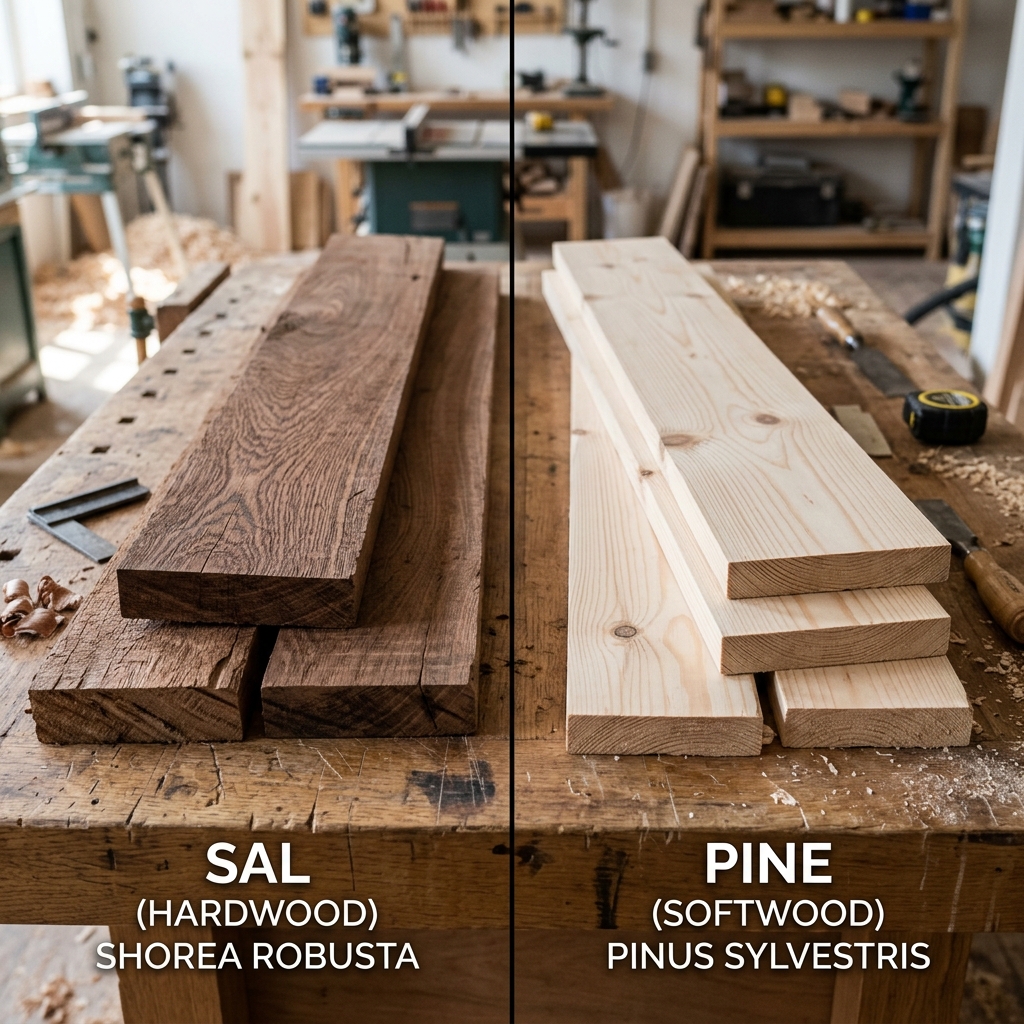
The choice between hardwood and softwood pallets directly impacts the safety of your cargo, the efficiency of your operations, and your bottom line. Both timber categories have distinct characteristics that make them suitable for different applications. For industries handling heavy machinery, automotive components, or high-value export goods in Mumbai, this decision is particularly critical.
In India, the most commonly used softwoods for pallet manufacturing include pine (Pinus species), spruce, and fir – primarily imported or plantation-grown. Hardwoods include sal (Shorea robusta), teak, neem, mango wood, and eucalyptus. Each species has unique properties that affect pallet performance, and the right choice depends on your load requirements, budget, and handling environment.
Understanding Hardwood Pallets
Hardwood pallets are manufactured from deciduous tree species that produce denser, heavier timber. In India, sal wood is the most popular hardwood for industrial pallets due to its exceptional strength-to-cost ratio. Sal pallets can handle significantly heavier loads than their softwood counterparts and are far more resistant to damage from forklift tines, impacts, and compression.
The density of hardwood timber ranges from 600 to 900 kg/m³, compared to 350 to 550 kg/m³ for softwoods. This higher density translates directly into greater load-bearing capacity. A well-constructed hardwood pallet can safely support static loads of 3,000 to 5,000 kg, making them essential for heavy engineering applications like turbine components, steel billets, and large automotive assemblies.
Understanding Softwood Pallets
Softwood pallets are made from coniferous tree species that grow faster and produce lighter, less dense timber. Pine is by far the most popular softwood for pallet manufacturing worldwide, and it dominates the export pallet market due to its availability, consistent quality, and ease of treatment. Softwood pallets are the standard choice for most logistics applications that don't involve extreme loads.
Despite the name, "softwood" does not mean weak. Well-manufactured pine pallets can handle loads up to 2,000 kg, which covers the vast majority of commercial and industrial shipping needs. Their lighter weight compared to hardwood pallets also means lower freight costs – a critical consideration for air freight and long-distance sea shipping where every kilogram matters.
When to Choose Hardwood
Hardwood pallets are the clear choice for heavy-load applications. If your cargo weighs more than 1,500 kg per pallet, involves dense materials like metals or machinery, or will undergo rough handling in industrial environments, hardwood provides the structural safety margin you need. Industries that should default to hardwood include heavy engineering, automotive assembly, steel processing, construction equipment, and defense logistics.
Additionally, hardwood pallets are preferred for reusable pallet pool systems because their durability means they can withstand hundreds of handling cycles before needing replacement. The higher upfront cost is offset by their longer lifespan and reduced replacement frequency.
When to Choose Softwood
Softwood pallets are ideal for standard commercial loads, export shipments where weight matters, FMCG and retail logistics, pharmaceutical packaging, and any application where the load per pallet is under 1,500 kg. Their lighter weight reduces freight costs, and their lower price point makes them economical for one-time use export shipments where the pallet will not be returned.
Pine pallets also have a significant advantage for ISPM-15 compliance: they absorb heat treatment more uniformly than dense hardwoods, resulting in faster processing times and more consistent treatment. This can be an advantage when dealing with tight export deadlines.
Expert Recommendation from Europack
In our 30+ years of manufacturing pallets in Mumbai, we have developed deep expertise in matching timber types to applications. Our general recommendation is to use hardwood for loads above 1,500 kg and reusable applications, and softwood for standard loads and one-time export shipments. For borderline cases, we often create hybrid pallets with hardwood stringers or blocks for structural support and softwood deck boards for weight savings.