The Essential Guide to ISPM-15 Heat-Treated Packaging
Everything you need to know about phytosanitary standards to ensure your cargo clears international borders without rejection.

In the world of international logistics, the ISPM-15 stencil is more than just a mark; it is a mandatory license for global transit. Established by the International Plant Protection Convention (IPPC), these regulations are designed to prevent the international spread of pests and diseases through wood packaging materials (WPM).
Why ISPM-15 Matters for Your Shipments
Failure to comply with ISPM-15 standards is one of the leading causes of shipment delays and rejections at destination ports. If your wooden packaging—including crates, pallets, and dunnage—is not properly treated and marked, customs authorities have the right to quarantine the cargo, refuse entry, or even order its immediate destruction at the exporter's expense.
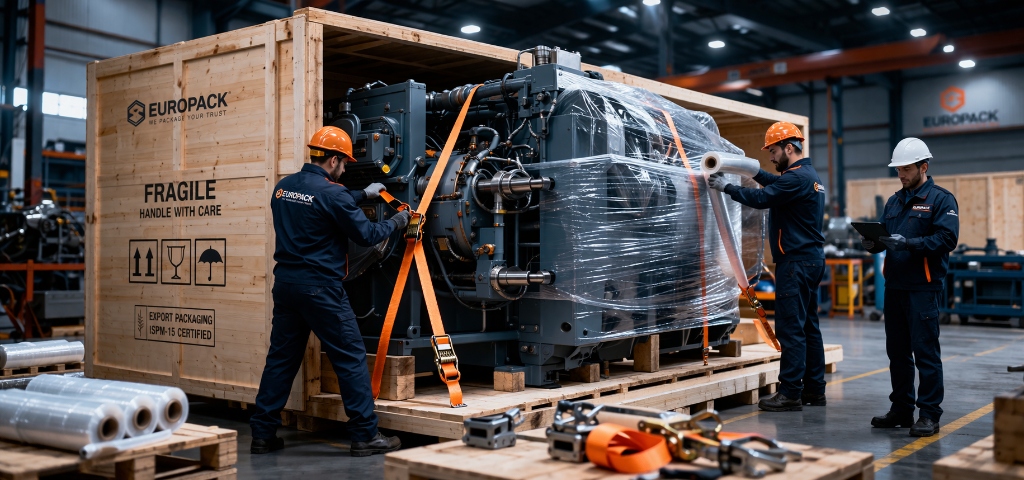
The Treatment Process: HT vs. MB
There are two primary methods approved for ISPM-15 compliance: Heat Treatment (HT) and Methyl Bromide (MB) Fumigation. At Europack, we exclusively use HT for environmental safety and superior moisture control.
The ISPM-15 Mark: Decoding the Stamp
Every compliant piece of wood packaging must carry a permanently applied mark. This mark usually consists of the IPPC 'Wheat' symbol, the ISO country code (e.g., IN for India), a unique producer code, and the treatment abbreviation (HT).