Moisture Control in Shipping Containers – Desiccants Guide
Complete guide to moisture control in shipping containers. Types of desiccants, quantity calculations, and preventing container rain damage.
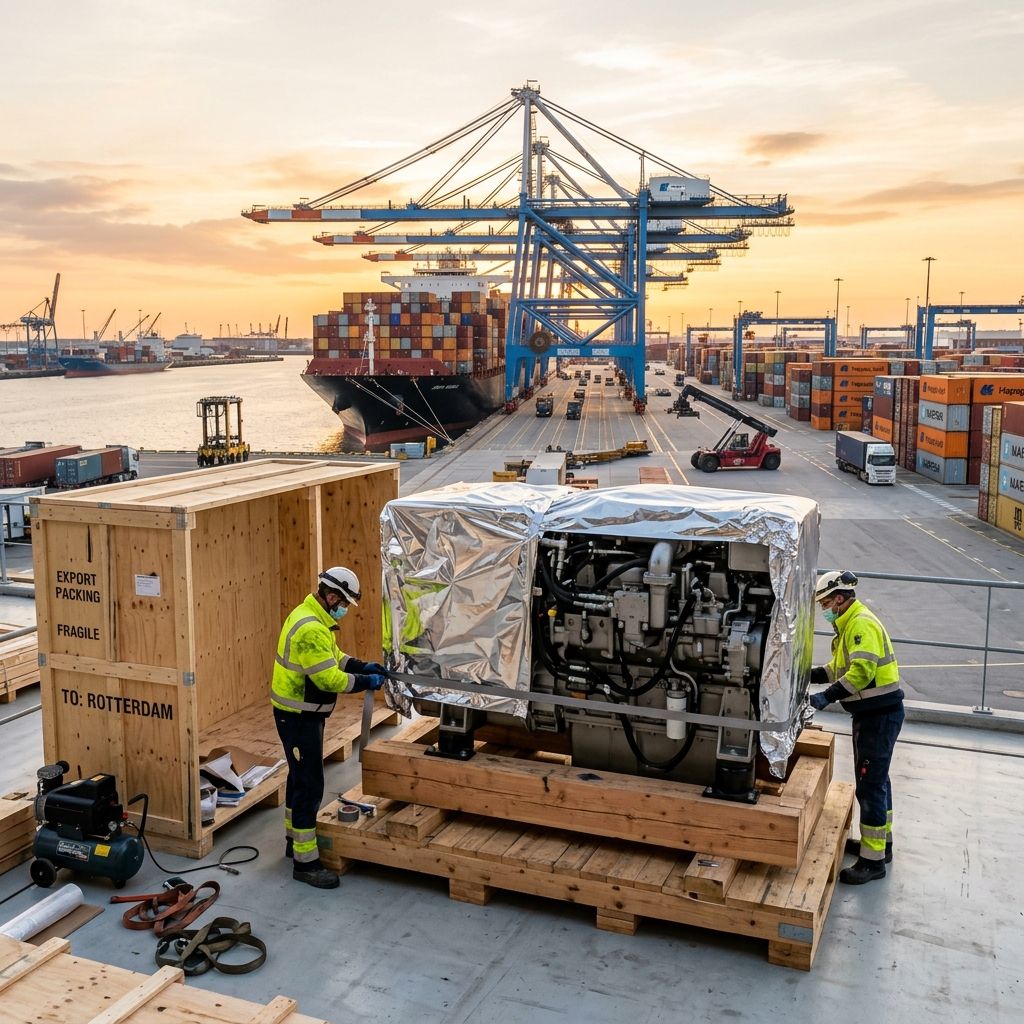
Container rain is the silent killer of export cargo. As shipping containers travel through different climate zones, the air inside undergoes dramatic temperature swings. Warm, humid air from tropical ports cools as the vessel enters temperate waters, causing moisture to condense on the container ceiling and walls. This condensation drips onto cargo below, causing water damage, corrosion, mold growth, and product contamination. Desiccants are the primary defense against container rain.
Types of Desiccants for Shipping
Silica Gel
The most common desiccant type. Absorbs up to 30-40% of its weight in moisture. Available in sachets from 1g to 1kg. Non-toxic, chemically inert, and indicator versions change color when saturated. Best for small packages and enclosed spaces inside crates.
Clay Desiccants
Bentonite clay-based desiccants are cost-effective for large-volume applications. Absorb up to 25-30% of their weight. Lower cost per gram of absorption than silica gel. Available in bags from 100g to 2kg. Best for container-level protection where cost matters.
Calcium Chloride Desiccants
The most powerful option, absorbing up to 300% of their weight in moisture. Available as hanging container strips or bags. Converts absorbed moisture into a gel, preventing re-release. Best for long ocean voyages through tropical routes where humidity is extreme.