How to Protect Machinery During Sea Transport
Step-by-step guide to protecting heavy machinery during ocean shipping. From VCI wrapping to container lashing, ensure zero-damage delivery.
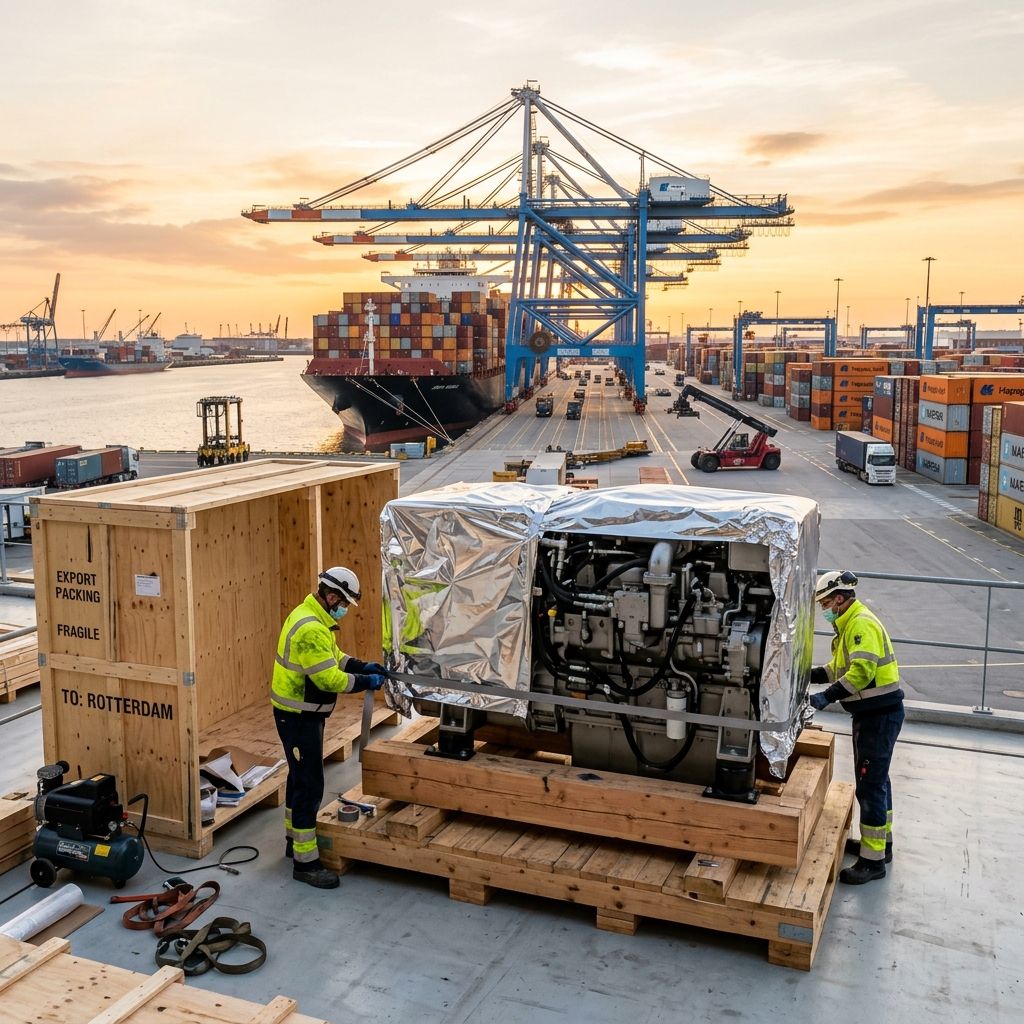
Shipping heavy machinery by sea is a high-stakes operation. A single turbine, generator, or CNC machine can be worth crores of rupees. The ocean environment – with its salt spray, humidity, vibration, and unpredictable weather – is hostile to precision equipment. This step-by-step guide outlines the proven methodology Europack uses to achieve zero-damage transit for heavy machinery shipments.
Step 1: Pre-Shipment Assessment
Before any packaging begins, our engineering team conducts a thorough assessment of the machinery. We document all dimensions, weight, center of gravity location, lifting points, fragile components, and any manufacturer-specified handling requirements. This assessment forms the basis of the custom packaging design.
Step 2: Surface Preparation
All exposed metal surfaces are cleaned and degreased. Any existing rust or corrosion is treated. Loose components, accessories, and documentation are inventoried and packed separately. Protruding parts that could be damaged are either removed or protected with custom guards.
Step 3: Corrosion Protection
Step 4: Moisture Barrier
The machinery is enclosed in an aluminum barrier foil bag, which is then sealed to create an airtight environment. Desiccant sachets are placed inside the sealed bag to absorb any residual moisture. The quantity of desiccant is calculated based on the enclosed volume and expected transit duration.
Step 5: Structural Packaging
A custom wooden crate or base is constructed around the machinery using ISPM-15 heat-treated timber. Internal bracing and blocking prevents any movement within the crate. Foam padding protects against vibration and minor impacts. The crate is designed to distribute the machinery weight evenly for forklift and crane handling.
Step 6: Container Loading and Lashing
The packed machinery is loaded into the container and secured using steel or polyester lashing straps. Lashing points are selected to prevent movement in all six directions. Dunnage (blocking material) fills gaps between the cargo and container walls. The lashing plan is documented and photographed for insurance purposes.