Types of Wooden Pallets: 2-Way vs 4-Way Pallets Explained
Comprehensive guide comparing 2-way and 4-way wooden pallets. Learn which type suits your warehouse, export, and logistics needs with detailed specifications.
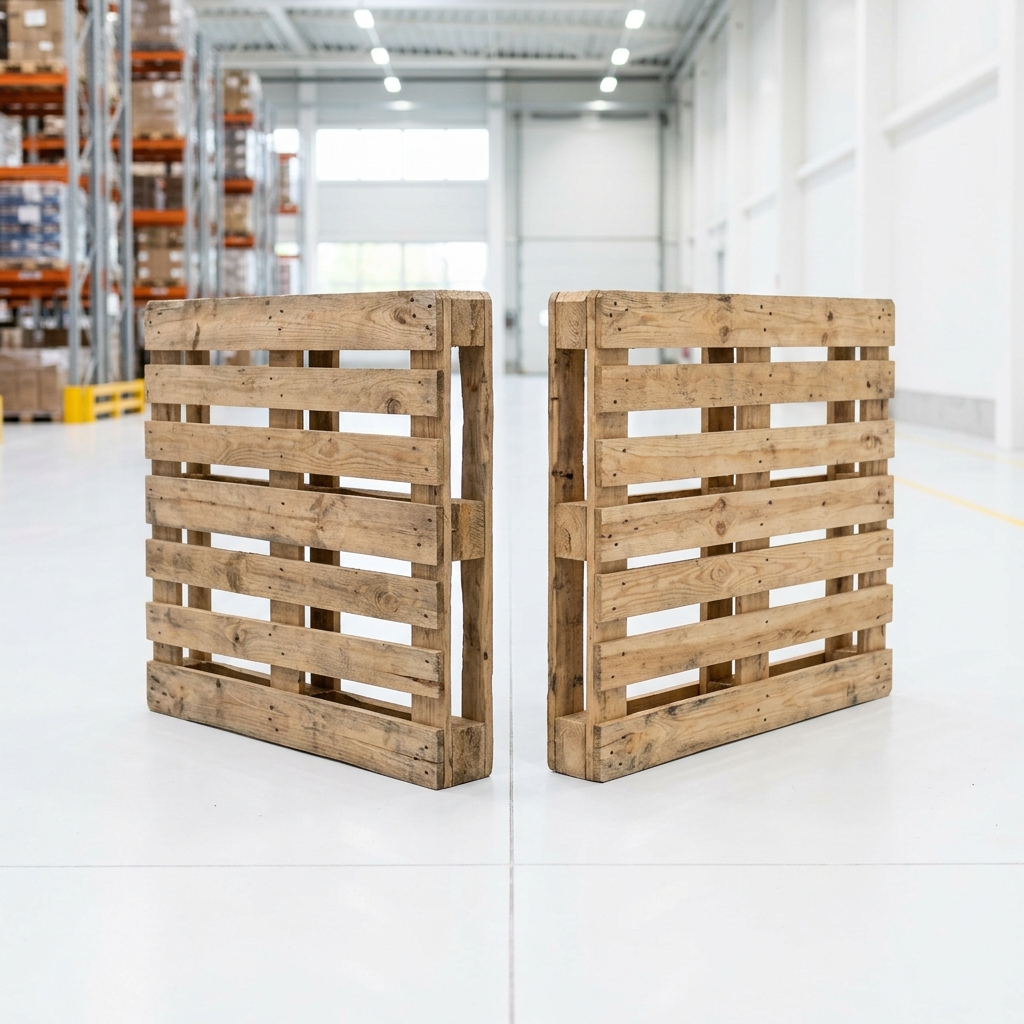
Choosing between 2-way and 4-way wooden pallets is one of the most important decisions in warehouse logistics and supply chain management. The wrong choice can lead to operational inefficiencies, damaged goods, and increased handling costs. This comprehensive guide breaks down every aspect of both pallet types to help you make an informed decision for your business.
In the Indian market, both 2-way and 4-way pallets are widely used, but their applications differ significantly. Understanding these differences is crucial whether you are managing a warehouse in Mumbai, shipping goods from JNPT port, or setting up a new distribution center anywhere in Maharashtra.
What Are 2-Way Entry Pallets?
Two-way entry pallets, also known as stringer pallets, have solid stringers running along the length of the pallet. Forklifts and pallet jacks can only enter from two opposite sides – typically the shorter sides. The stringers provide the primary structural support and determine the pallet's load-bearing capacity.
These pallets are constructed using three parallel stringers (two outer and one center) with deck boards nailed across the top and bottom. The solid stringer construction means there is no entry point for forklift tines on the other two sides. This design is inherently strong because the continuous stringer provides uninterrupted structural support along the full length of the pallet.
What Are 4-Way Entry Pallets?
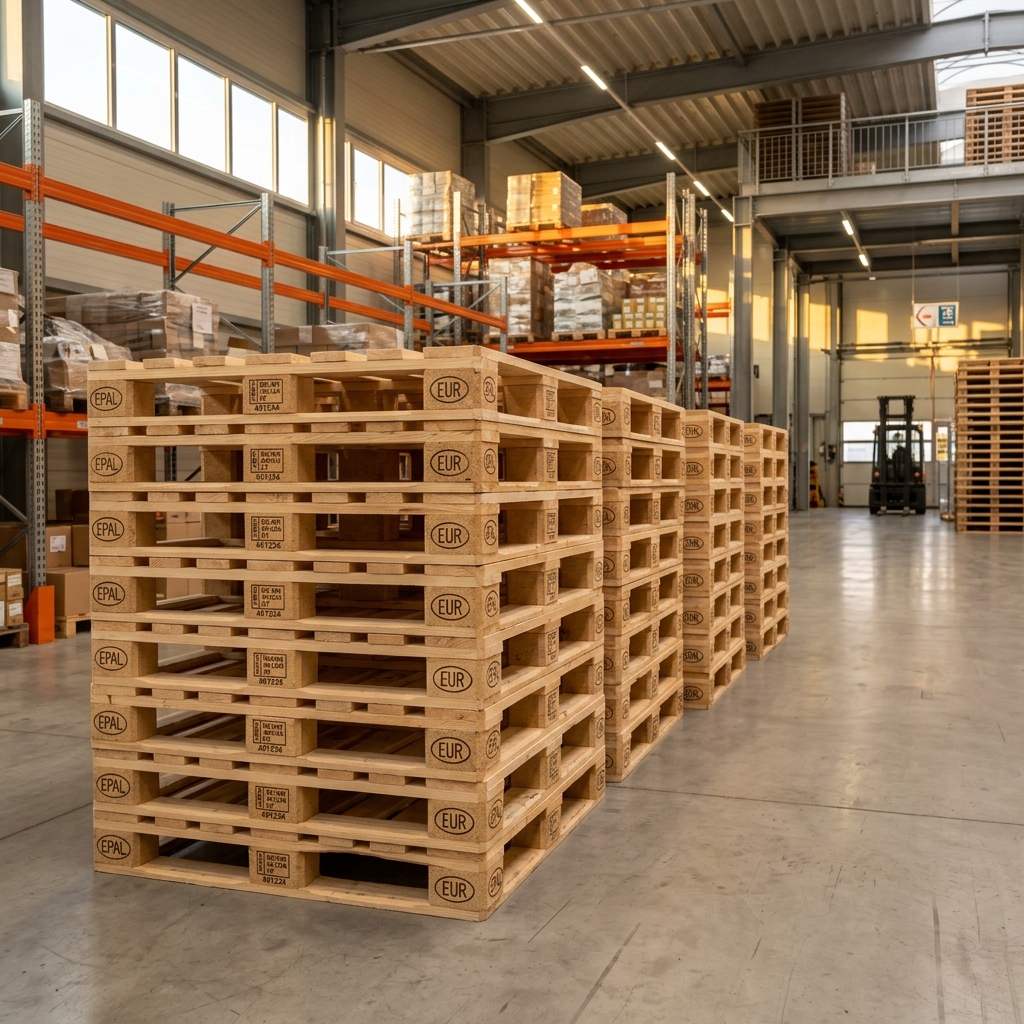
Four-way entry pallets use blocks instead of continuous stringers, creating openings on all four sides that allow forklift and pallet jack access from any direction. This makes them significantly more versatile in busy warehouse environments and essential for international shipping where pallets may be handled by different equipment at multiple points.
The construction uses nine or more blocks positioned at corners, midpoints, and center, with stringers connecting the blocks. The top and bottom deck boards are then nailed across these block-and-stringer assemblies. While slightly more complex to manufacture, the engineering result is a pallet that can be approached and lifted from any angle.
Head-to-Head Comparison: 2-Way vs 4-Way
Handling Flexibility
The single biggest advantage of 4-way pallets is handling flexibility. In a large warehouse with multiple aisles and loading docks, being able to approach a pallet from any direction saves significant time and reduces the risk of product damage from awkward lifting angles. For export shipments that pass through multiple handling points – factory floor, truck, port, container, destination warehouse – 4-way access is practically essential.
Two-way pallets work well in controlled environments where forklift operators always approach from the same direction. If your warehouse uses narrow aisle racking with a consistent flow pattern, 2-way pallets may actually be preferable as they tend to be slightly stronger in the primary load direction.
Structural Strength
Two-way pallets have a structural advantage in their primary load direction because the continuous stringer provides uninterrupted support. Four-way pallets distribute load across blocks, which can create slight stress points at the block junctions. However, modern manufacturing techniques and quality timber have largely eliminated this concern for standard loads under 2,000 kg.
For extremely heavy loads (industrial machinery, steel components, etc.), we often recommend a hybrid approach: custom-engineered 4-way pallets with reinforced blocks and thicker deck boards. These maintain the handling flexibility of 4-way design while providing the structural integrity needed for multi-ton loads.
Cost Analysis
Two-way pallets are typically 15-20% cheaper than their 4-way counterparts of the same size and timber grade. This is because they use less material and are simpler to manufacture. For businesses with large pallet requirements (3,000+ units per month) operating in controlled warehouse environments, this cost difference can be substantial.
However, the total cost of ownership often favors 4-way pallets when you factor in: reduced handling time (labor savings), fewer pallet jams and damage incidents, universal compatibility with any handling equipment, and higher resale value in the secondhand pallet market. For export operations, 4-way pallets are essentially mandatory and the cost premium is simply a cost of doing business.
Which Type Should You Choose?
The decision ultimately depends on your specific use case. Here is our expert recommendation based on three decades of experience serving Mumbai industries:
At Europack, we manufacture both 2-way and 4-way pallets in all standard and custom sizes. Our engineering team can analyze your specific requirements and recommend the optimal solution for your operation. We also offer sample pallets for testing before committing to a bulk order.
International Standards and Sizes
Different markets have different standard pallet sizes. The most common international standards include the EUR pallet (1200x800mm) used extensively in Europe, the ISO standard (1200x1000mm) popular in Asia-Pacific, the North American standard (48x40 inches / 1219x1016mm), and the Australian standard (1165x1165mm). Europack manufactures pallets in all international standard sizes and can create custom dimensions to match your container loading optimization requirements.