Vacuum Packing for Export – Why It Matters
Why vacuum packing is essential for export shipments. Process, benefits, and how it protects sensitive equipment from moisture and corrosion.
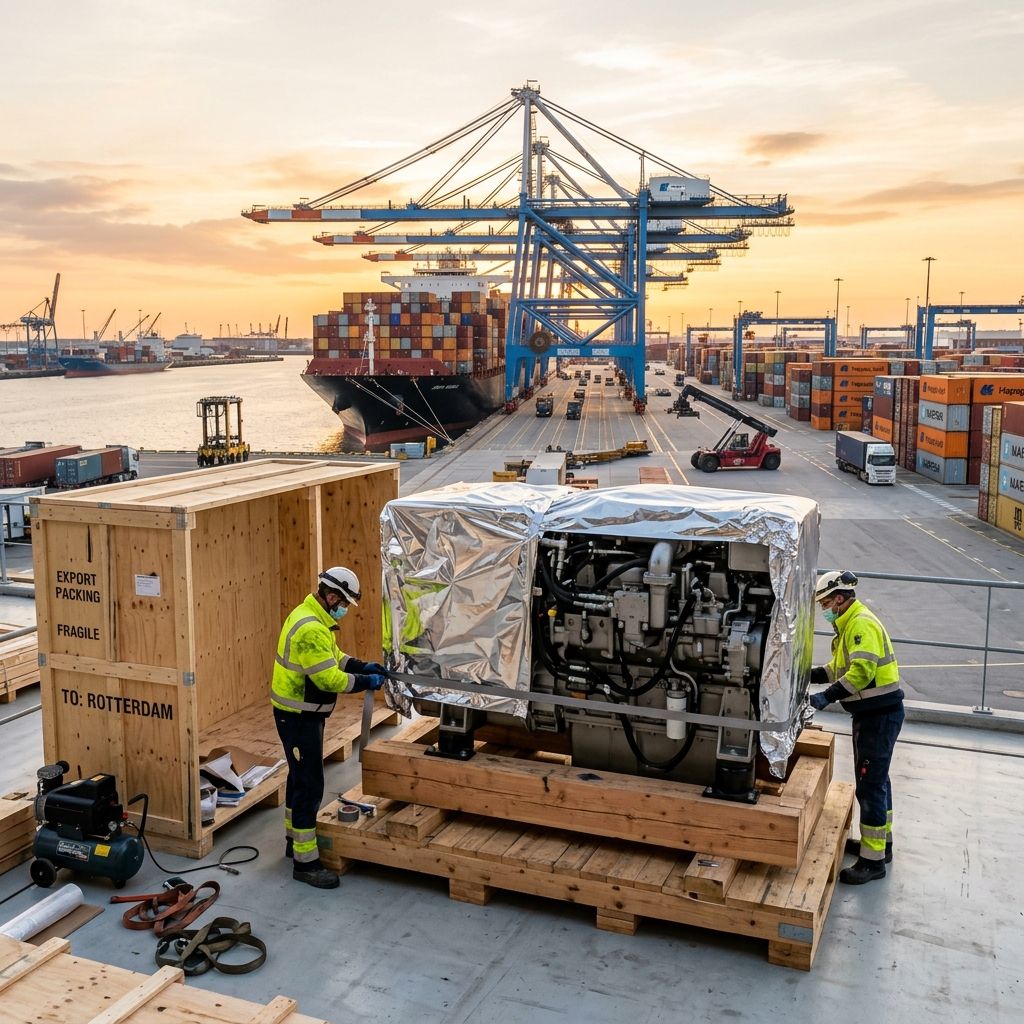
Vacuum packing for export is one of the most effective protection methods available for sensitive industrial equipment, precision machinery, and metal components. By removing air from the sealed package, vacuum packing eliminates the moisture and oxygen that cause corrosion, mold, and degradation. For Indian exporters shipping high-value goods through JNPT and Mumbai ports, vacuum packing can be the difference between a successful delivery and a costly insurance claim.
How Export Vacuum Packing Works
The process involves placing the item inside a multi-layer aluminum barrier foil bag, adding VCI materials and desiccants for additional protection, extracting the air using industrial vacuum pumps to reduce internal pressure to approximately 10-20% of atmospheric pressure, and heat-sealing the bag to maintain the vacuum. The result is a hermetically sealed package with minimal moisture and oxygen content, creating a hostile environment for corrosion.
When to Use Vacuum Packing
Benefits Over Standard Packaging
Europack Vacuum Packing Service
Europack operates industrial vacuum packing equipment at our Navi Mumbai facility. We handle items from small precision components to large machinery weighing several tons. Our process includes pre-cleaning, VCI application, aluminum barrier bagging, vacuum extraction, heat sealing, and integrity testing. Every vacuum-packed item includes humidity indicator cards for verification at the destination.