VCI Packaging – Prevent Rust in Export Shipments
Complete guide to VCI (Volatile Corrosion Inhibitor) packaging for export. How VCI works, types, applications, and best practices for rust prevention.
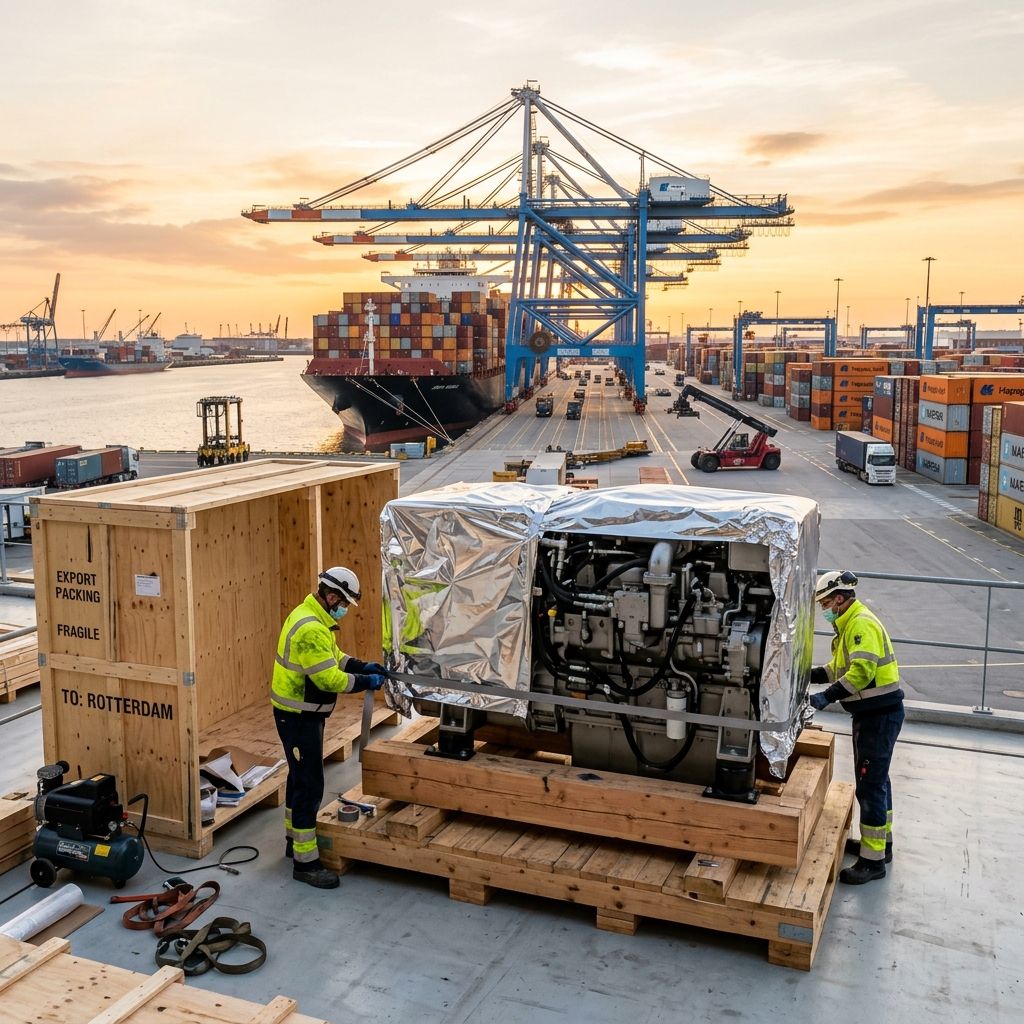
Corrosion costs the global economy over $2.5 trillion annually, and export shipments are particularly vulnerable. The combination of salt air, humidity, temperature fluctuations, and long transit times creates the perfect conditions for metal corrosion. VCI (Volatile Corrosion Inhibitor) packaging is the most effective and practical solution for protecting ferrous and non-ferrous metals during export. This guide explains how VCI works and how to use it effectively.
How VCI Technology Works
VCI molecules are incorporated into packaging materials (films, papers, foams) during manufacturing. When sealed inside a package with metal parts, these molecules vaporize and form an invisible, molecular-thin protective layer on all metal surfaces. This layer blocks the electrochemical reaction that causes corrosion. The protection is continuous: as molecules are consumed, new ones vaporize from the packaging material to maintain the barrier. VCI protection can last from 6 months to 5+ years depending on the product type and packaging configuration.
Types of VCI Products
Application Best Practices
VCI for Different Metals
Different metals require different VCI formulations. Ferrous metals (steel, iron, cast iron) are the most common application. Non-ferrous metals (aluminum, copper, brass) require specific formulations that do not cause staining or tarnishing. Multi-metal formulations are available for assemblies containing both ferrous and non-ferrous components. Always verify compatibility before using VCI on precision or cosmetic surfaces.