Wooden Crates vs Wooden Boxes – What's the Difference?
Understand the key differences between wooden crates and boxes. Construction, strength, cost, and when to use each for your packaging needs.
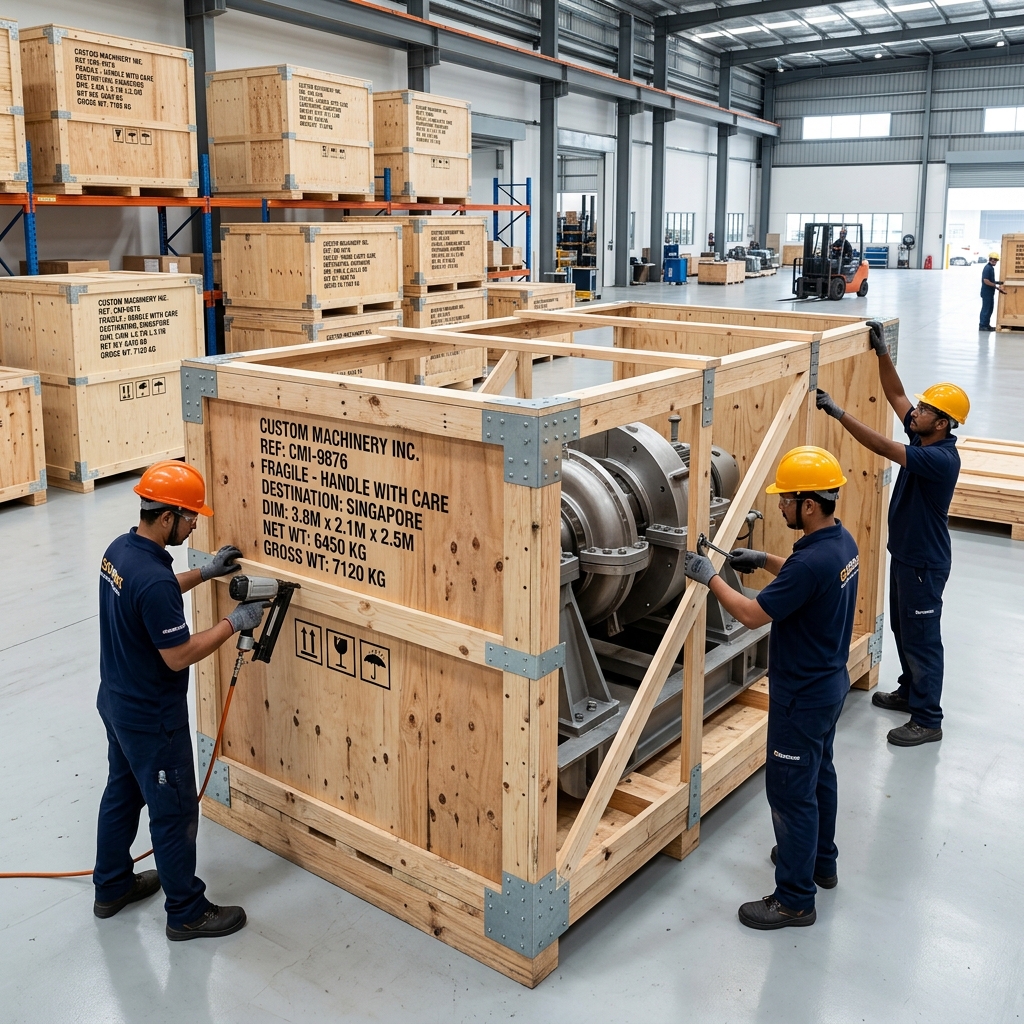
Many people use the terms "wooden crate" and "wooden box" interchangeably, but they are structurally different products designed for different applications. Understanding this distinction helps you choose the right packaging and avoid overspending on unnecessary protection or underspending on inadequate packaging.
Wooden Crates – Open Frame Construction
A wooden crate is an open-frame structure made from lumber members (typically 50x50mm to 100x100mm) fastened together to form a rigid skeleton. The framing is then covered with plywood, OSB, or lumber sheathing. Crates are visible – you can often see the structural frame on the outside. They excel at containing heavy, irregularly shaped items because the frame can be custom-built around any shape. Load capacity ranges from 500 kg to 50+ tons.
Wooden Boxes – Panel Construction
A wooden box is a closed, panel-based structure where plywood or solid wood panels form the walls, floor, and lid. The panels are reinforced with cleats and battens. Boxes have smooth exterior surfaces ideal for stacking, labeling, and handling. They provide better protection against dust, moisture, and contamination than open crates. Load capacity typically ranges from 100 kg to 5 tons.