Heat Treated Wooden Pallets vs Chemical Treatment – Complete Comparison
Understand the differences between heat treatment (HT) and chemical treatment (MB) for wooden pallets. Which method is safer, more effective, and globally accepted?
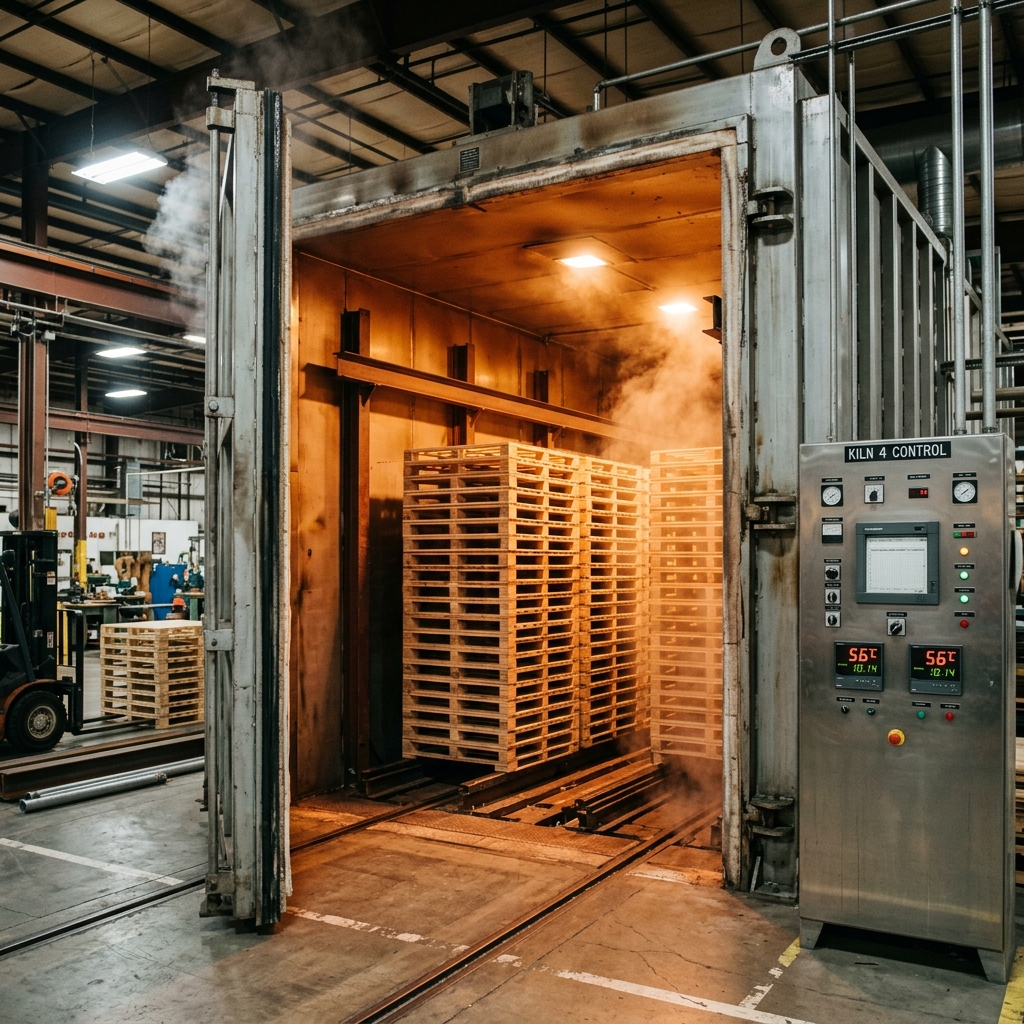
When it comes to treating wooden pallets for export, there are two primary methods approved under ISPM-15: Heat Treatment (HT) and Methyl Bromide fumigation (MB). However, these two methods could not be more different in terms of safety, environmental impact, global acceptance, and effectiveness. This guide explains why heat treatment is now the undisputed standard and why you should avoid methyl bromide entirely.
The purpose of both treatments is the same: to kill any insects, larvae, fungi, or other organisms living within the wood fibers. Untreated wood can carry invasive species that devastate ecosystems in the destination country. The treatment ensures that wooden packaging is biologically inert when it crosses international borders.
Heat Treatment (HT) – The Gold Standard
Heat treatment works by raising the core temperature of the wood to a minimum of 56°C (132.8°F) for at least 30 continuous minutes. At this temperature, all known wood-boring insects, their larvae, and pathogenic fungi are killed. The process is conducted in sealed, temperature-controlled kilns equipped with calibrated sensors that monitor the core temperature throughout the batch.
The treatment is purely physical – no chemicals are used whatsoever. The wood is heated using steam, hot air, or radiant heat. After treatment, the wood is allowed to cool naturally. The process also reduces the moisture content of the wood, which provides an additional benefit: lower moisture means less risk of mold growth during transit and a lighter pallet for shipping.
Methyl Bromide (MB) – Obsolete and Dangerous
Methyl bromide fumigation involves exposing the wood to methyl bromide gas in a sealed chamber for 16-24 hours. The gas penetrates the wood and kills organisms through cellular toxicity. While effective at pest elimination, methyl bromide is one of the most environmentally destructive chemicals still in limited use.
Methyl bromide is classified as a Class I ozone-depleting substance under the Montreal Protocol. A single fumigation treatment releases gas that can persist in the atmosphere for over a decade, actively destroying the ozone layer. The substance is also acutely toxic to humans, with exposure causing severe neurological damage, respiratory failure, and even death.
Why Europack Exclusively Uses Heat Treatment
At Europack, we made the decision to use heat treatment exclusively over fifteen years ago, well before many countries began banning methyl bromide. Our reasons are straightforward: heat treatment is safer for our workers, better for the environment, more effective at preventing mold and moisture issues, and universally accepted at every port in the world.
Our Navi Mumbai facility operates multiple industrial-grade heat treatment kilns capable of processing over 500 pallets per cycle. Every batch is documented with continuous time-temperature charts, and we maintain records for a minimum of two years for audit purposes. Our facility is regularly inspected by government-appointed auditors to ensure ongoing compliance.
Making the Right Choice
The choice between HT and MB should be straightforward: always choose heat treatment. There is no scenario in modern logistics where methyl bromide offers any advantage over heat treatment. MB is more expensive per treatment cycle, increasingly rejected at ports, poses serious health and environmental risks, and leaves chemical residues on the wood. If your current pallet supplier uses methyl bromide, we strongly recommend switching to a heat treatment-certified manufacturer immediately.